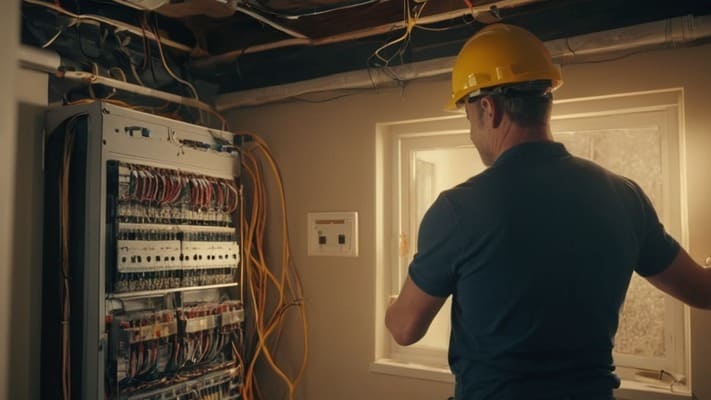
Why You Need a Skilled Renovation Electrician in Tricity for Safe Upgrades
Remodeling your home is exciting—but when wires, panels and load calculations are involved, the difference between safety and hazard comes down to the electrician you choose. This guide explains why a skilled renovation electrician Tricity is essential, what they deliver, and how to hire one with confidence.
Introduction — a single flicker can tell a story
Have you ever flipped a switch and noticed a subtle flicker or heard a faint hum from inside the wall? Small electrical symptoms like these can be the first sign of deeper problems, especially when you’re altering rooms or adding modern technology. In Tricity, where many homes combine older wiring with contemporary expectations, a remodel without the right electrical expertise often leads to surprises, delays, and safety risks. In this article I’ll walk you through the real reasons a renovation electrician Tricity, what separates a repair-focused technician from a renovation specialist, and the practical deliverables you should insist on during a project. Read on and you’ll gain the tools to vet candidates, avoid common pitfalls, and ensure your remodel is both beautiful and safe. This is not about scaremongering; it’s about reality. Proper electrical work protects your investment, your family, and your future plans (EVs, heat pumps, home automation). A skilled renovation electrician Tricity is the professional who makes all that possible—and who keeps you out of trouble.
The real dangers of DIY and generalist electrical work
Electrical systems hide in walls, under floors, and above ceilings. Their failures are seldom dramatic at first: a buzzing outlet, a warm plate, a breaker that trips under load. Left unaddressed or treated by someone without renovation experience, these signs can herald overheating cables, deteriorating insulation, or improper splices. Those conditions escalate risk—sometimes quietly, sometimes with catastrophic consequences. DIYers and generalist electricians often treat renovations like a series of discrete repairs: move this outlet, add that light. But renovation work demands systemic thinking. It requires load calculations, planning for future additions, coordination with structural and mechanical trades, and strict adherence to updated codes. Without that package of skills, you get patchwork solutions that break sooner and cost more in the long run. Beyond immediate safety, there are legal and insurance stakes. Unpermitted or non-compliant electrical work can void insurance claims or fail inspections when you try to sell. When the wiring is wrong, the cost is not only financial—it can be the peace of mind you lose.
What defines a skilled renovation electrician in Tricity?
A renovation electrician is more than a tradesperson who knows how to connect wires. The skilled ones combine several specific capabilities: deep retrofit experience; load planning and foresight; up-to-date code knowledge; meticulous documentation; and professional coordination with other trades and permitting authorities. In other words, they’re planners, technicians, and communicators in one package. They understand that your remodel may include incompatible generations of wiring, obstructed routing, and unexpected structural details. They bring strategies for minimizing demolition, leaving future expansion capacity, and integrating modern systems like EV chargers, solar, or battery storage. They also know how inspectors think—and how to design work that passes with minimal back-and-forth. Finally, they treat disruption as part of the job to manage, not as an afterthought. A skilled renovation electrician stages materials thoughtfully, isolates work safely, controls dust, and keeps critical circuits online when possible. The work is efficient, tidy, and respectful—qualities that quickly become apparent during a remodel.

Deliverables you should insist on
If you hire a renovation electrician, certain deliverables separate professional installations from mediocre ones. Insist on a site walk with photographs and diagnostic notes; a formal load calculation and capacity plan; a routing and design schematic; permit documentation and inspection scheduling; labeled circuits and a panel schedule; and warranty paperwork. Expect a clear scope: which circuits will be new, what feeders or subpanels are needed, and where future expansions are accommodated. A competent electrician will produce a brief plan—drawings or annotated photos—that you and other trades can reference. They’ll also provide post-work documentation that makes maintenance and future upgrades straightforward. These deliverables shift risk from you to the professional. If a contractor refuses to provide them, that’s a red flag. Professionals understand that their work must stand up to scrutiny and be comprehensible to anyone who inherits your home later.
Step-by-step: how professionals handle remodel electrical work
1. Site walk & photography
The first visit is not about giving a quick price. It’s a diagnostic session: the electrician photographs the panel, identifies junctions, traces visible conduits, and notes possible conflicts with plumbing, HVAC, and structural framing. These records reduce surprises and form the basis of design decisions.
2. Load calculation and planning
Load calculations quantify what your remodel will draw—both continuous and peak loads. This determines whether your current service or panel needs upgrading or whether a sub-panel will suffice. The calculation also guides breaker sizing, conductor gauge, and voltage drop mitigation strategies. Good design saves money down the line by avoiding undersized feeders or crowding the panel.
3. Permits and inspection coordination
A professional pulls required permits, prepares permit-ready sketches, and schedules inspections at the right phases (rough-in and final). They know municipal requirements and typical inspector concerns—so work is done to pass, not just to look acceptable.
4. Rough-in wiring
In the rough-in phase, conduit, cables, boxes, and sub-panels are positioned and secured before walls are closed. Each run is labeled and protected. Inspectors check this stage to ensure circuits are routed safely and box fill meets code.
5. Trim and commissioning
After drywall and finishes, the electrician trims: installs devices, connects fixtures, tests circuits, and ensures protective devices (GFCIs, AFCIs) function as intended. They perform load tests and correct any imbalances before final inspection.
6. Documentation and handover
At completion you should receive a labeled panel schedule, wiring diagram, permit sign-offs, and warranty info. This documentation is the single most valuable thing you keep: it clarifies what was done and where future additions can safely connect.

Practical, real-world example — an old house upgraded for modern life
Why “cheaper” often costs more
When bidding renovation work, the lowest price often reflects shortcuts: undersized conductors, omitted safety devices, or poor routing that looks fine until a load is applied. Those shortcuts surface later as failures: overheated wires, tripped circuits, and demands for rework. The cost of pulling apart newly finished walls is exponentially higher than doing the job right the first time. In addition, low-quality work invites liability. Insurance claims arising from poorly executed electrical work can become contested. The upshot is simple: spending more for a reputable, experienced renovation electrician provides long-term savings and significantly reduced risk. Prioritize transparency: insist on an itemized estimate that shows materials, labor, permit fees, and a contingency for surprises. That clarity protects you from hidden upcharges and lets you evaluate value instead of just price.
How to vet and select a skilled renovation electrician in Tricity
Start with licensing and insurance. Confirm the electrician’s license is current and that they carry liability insurance and workers’ compensation. These are minimum requirements—no compromise. Beyond that, request project portfolios, contactable references, and examples of similar retrofit work. Look for consistent experience with homes of your era and renovation type. Ask for a line-item estimate. A transparent quote spells out wire types, conduit, junction boxes, breakers, labor hours, permit costs, and contingencies. If a contractor offers only a lump sum without detail, that’s a red flag. Being able to compare itemized bids is crucial. Test technical fluency by asking about AFCI/GFCI placement, voltage drop mitigation, box-fill concerns, and future expansion for EVs or solar. Watch how they explain trade-offs: a skilled professional explains clearly and calmly without resorting to jargon or obfuscation.
Common problems in Tricity remodels and how pros avoid them
Remodels often reveal hidden wiring, unexpected framing, and cramped cavities where ducts and pipes compete for space. Professionals build contingency time and budget into every project to account for this. They prefer flexible conduit for congested runs, coordinate routing with other trades, and stage work so that problems are discovered early when corrections are inexpensive. Panel capacity is another recurring issue. A renovation electrician will propose the right fix—be it a sub-panel, a partial panel reconfiguration, or a full-service upgrade—based on a measured load calculation rather than a quick judgment. The selection is driven by long-term value, not short-term convenience. Finally, permitting and inspection delays can be minimized by experienced contractors who know local processes. They submit precise drawings, preempt common inspector concerns, and respond quickly if the inspector requests follow-up—keeping your remodel moving.
How to prepare your home before electrical work begins
Preparation pays. Photograph your existing panel and visible wiring, create a detailed list of all significant loads you plan to run (EV chargers, heat pumps, ovens, workshop tools), and identify circuits that must remain powered during the job. Clear access to work areas, move fragile belongings, and coordinate scheduling with other trades to reduce conflicts and downtime. Communicate any special needs—medical equipment, refrigeration, or security systems—so the electrician plans phased service or temporary feeds. Good communication and a short prep checklist make the job safer and typically faster, reducing cost and disruption.

When to cultivate a long-term relationship with an electrician
The best renovation electrician Tricity become long-term partners. Once someone knows the topology of your home’s wiring, they handle future upgrades and maintenance more efficiently. Whether it’s installing an EV charger, adding solar and battery storage, or expanding a suite, using the same electrician avoids repeated diagnostics and reduces surprises. Treat your first project as both a technical and personal test: punctuality, clarity, and thoroughness are signs you’ve found someone to keep on call. A reliable long-term contractor also helps with preventative maintenance, simple safety checks, and advice on sequencing future upgrades. That ongoing relationship translates into lower lifetime cost and better system reliability.
Conclusion — choose foresight over shortcuts
Remodeling in Tricity is an opportunity to bring your home fully into the present—and prepare it for the future. Electrical work sits at the heart of that transformation. A skilled renovation electrician Tricity provides more than technical work: they provide foresight, safety, and long-term value. They ensure your home supports the things you want to install today and the technologies you’ll need tomorrow. If you’re planning a remodel, start by collecting two or three detailed, itemized quotes from electricians experienced in retrofit work. If you like, share those scopes and I’ll help you evaluate them, spotting omissions or unnecessary savings that will cost you later. Or tell me the age and type of your house and your renovation goals, and I’ll sketch the electrical scope you should expect to see in a professional quote.